
I am a curator of random facts.

Lords-and-ladies (Arum maculatum) flower and leaves
Hello, and welcome to the Herbarium.
Much as I love to illustrate plants and visit gardens, I myself am in no way green fingered, very much the opposite, in fact, as my former Aloe Vera can attest.
However I am a curator of odd, random and often interesting facts. The odder the fact the more likely it is to become lodged within my mind. As I frequently research and reference plants in order to draw them, I am amassing quite a few random botanical facts. So this corner of the internet is somewhere for me to jot them down.
Starting from the top: it is estimated that there are approximately 390,900 plants known to science, of which about 94% are flowering plants.
The word Herbarium is the name for a collection of preserved plant specimens and data, this method of collation can be traced back to Italy's Renaissance. A similar collection of fungi is known as a Fungarium, which I find to be a very satisfyingly rounded word.
And speaking of names: plants can be known by a huge variety of different names, typically they have three main names: a Scientific or Latin name, a Common name (there can be loads of these) and a Cultivated name (often highlights a specific trait). And if that weren’t enough, plants can also be classified by family, as a hybrid or variety.
A great example is Arum maculatum, translating to Spotted Arum, it has more than 30 different common names. I know it as Lords-and-Ladies, aka:
Adam and Eve
Adder's meat
Adder's root
Arum
Wild arum
Arum lily
Bobbins
Cows and bulls
Cuckoo pint
Cuckoo-plant
Devils and angels
Friar's cowl
Jack in the pulpit
Lamb-in-a-pulpit
Naked boys
Snakeshead
Starch-root
Wake-robin
And that’s just 19 of them.
Easter is coming up, along with fond memories of the smell of rosemary roasting, I will be discussing that charming herb.
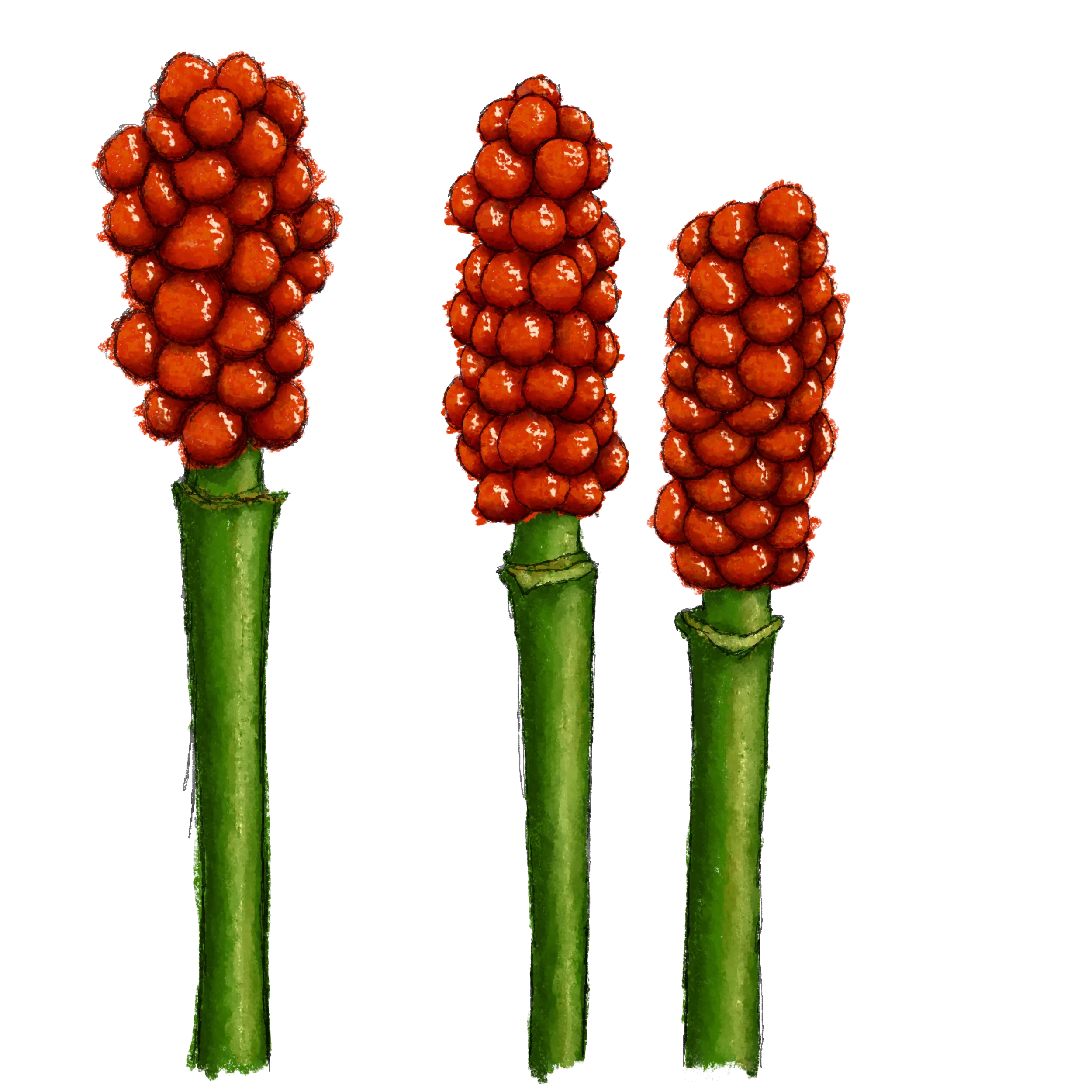
Stem and berries of a lords-and-ladies plant.
To subscribe to this Herbarium, and receive the latest posts straight to your inbox, click on the button above.