

“You don't look autistic.”
“Everything is fine.”
These are the two statements that follow autistic women around. They are also the two things most likely to be completely untrue.
Most autistic women in your organisation will tell you everything is fine. They don't look autistic, they've spent their whole lives learning not to. That is not inclusion working. That is masking, and the two are not the same thing.
What is actually happening underneath
Imagine running the following processes simultaneously, every day, in every meeting, in every interaction:
Constantly pushing a shield against the sights, sounds, smells and touches that threaten to engulf you. Translating non-verbal communication in real time, like working in a foreign language where some words are familiar, a few simple phrases are manageable, and the accent can be mimicked well enough to pass, but fluency is never quite there and every interaction still requires conscious translation. Monitoring expected social cues and adjusting behaviour accordingly. Managing the gap between internal experience and external presentation. Anticipating how every response will land before giving it.
The conversation about women's mental load and the daily juggle of caring responsibilities with work is already happening in your organisation. Autistic women are carrying all of that, and more, in every room they walk into. Including yours.
This is the reality of autistic masking. It is a full time cognitive undertaking with a cost that accumulates quietly over years, and it is not a quirk or a coping strategy.
There is no quick fix
Most inclusion training implicitly promises to solve something. This does not.
An autistic woman functions best when she has a degree of control over her environment and a thorough understanding of herself. That understanding typically follows years of meticulous research after the realisation that she could be autistic, long after the habits of masking and compensating have become indistinguishable from personality.
Late diagnosis autism is not a footnote. For most autistic women, diagnosis comes decades after the difficulties began. Autistic women are diagnosed significantly later than autistic men on average, and many are never diagnosed at all. They simply learn to mask well enough that no one looks further.
A training session cannot undo that. Understanding it is where every useful change begins.
What that leaves autistic women vulnerable to
Late diagnosis combined with a lifetime of autistic masking, cognitive overload, and the social isolation that comes with feeling perpetually different creates specific and predictable vulnerabilities: to relationships that replicate the dynamic of never being believed, to workplaces that mistake composure for coping, and to systems that were not designed with their experience in mind and that fail them quietly rather than visibly.
Research consistently finds autistic women at significantly higher risk of coercive control and domestic abuse than their neurotypical peers. They are more likely to reach crisis point before anyone around them has noticed anything is wrong. They are more likely to be told, by the very services designed to help them, that they don't look like they need help.
What autistic women share is the experience of navigating a world that was not built for them, largely alone, largely unseen. There is no single look, no checklist, no presentation that covers the full range of that experience.
What actually helps
Not a hug, a policy document, or a well-meaning assumption about what someone needs. It is simpler and harder than any of those things.
Listen. Be specific about what you can offer rather than asking open ended questions that are impossible to answer under pressure. Give time and space to respond. Be flexible when the environment or the format isn't working. Assume that composure is not the same as comfort.
That is what I speak about. There is no solution to offer, there is an understanding that makes the people in your organisation better equipped to see what is in front of them.
What audiences leave with
After this talk audiences will better understand:
why autistic women mask
why composure isn't the same as coping
why late diagnosis matters
why many autistic women remain unseen
practical ways to communicate more effectively
Female autistic lived experience, spoken from the inside
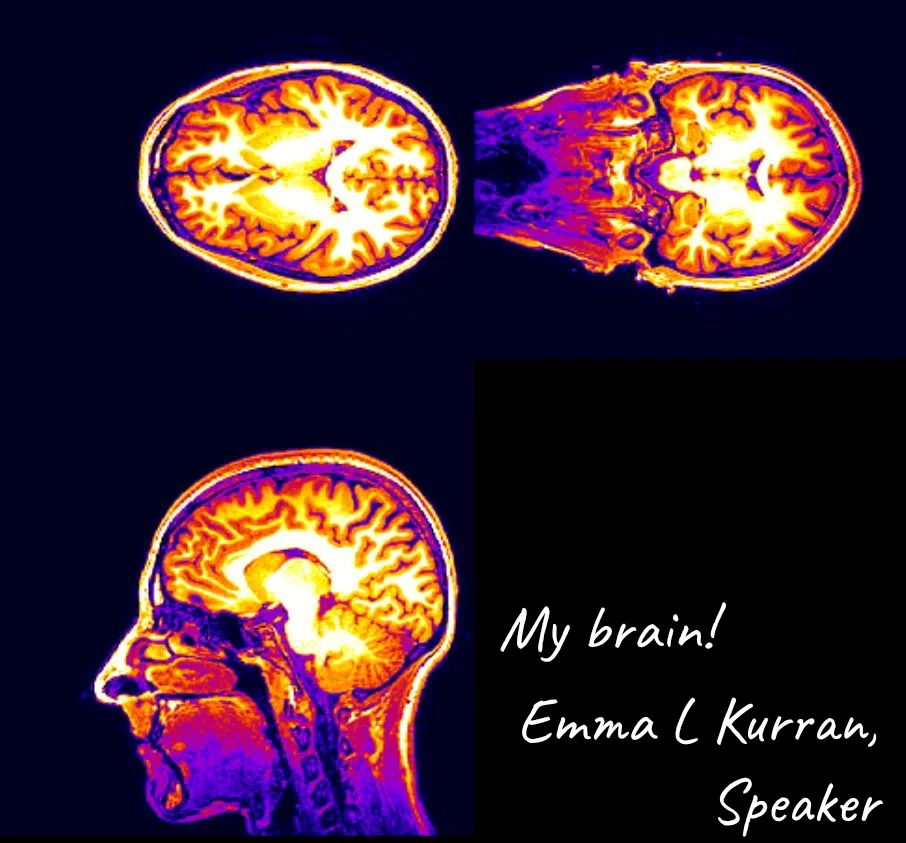
I have been speaking about autistic lived experience to clinical and professional audiences since 2018, including an annual lecture delivered to MSc students in Clinical Neurodevelopmental Sciences at King's College London for eight years.
As an autistic speaker based in the UK, my work is grounded in direct experience across education, diagnosis, healthcare, employment and motherhood. I speak from the inside of that experience, not about it from a distance. That perspective does not replace clinical knowledge; it complements it by showing what autism looks and feels like from the person living it.
Most professionals will never meet an autistic woman who says exactly what she is thinking or feeling. My talks help explain why, what that costs, and what practical changes make the biggest difference.
What I offer
Best suited to
Conferences, awareness events
Universities, NHS, professional training
Discussions and public events
Format
Short talk, 20 to 30 minutes
Full lecture, 60 to 90 minutes
Panels and podcasts
Specialist topics
Alongside my core lecture on autistic lived experience, I can develop sessions around particular professional contexts or themes.
Late diagnosis and autistic masking
Why many autistic women remain unseen for decades, the cognitive cost of masking, and how that shapes communication, wellbeing and support.
Healthcare and maternity services
Drawing on my own experiences across pregnancy, birth and postnatal care, this session explores what masking looks like in clinical settings, why composure is not the same as coping, and what helps autistic women communicate honestly with healthcare professionals.
Coercive control and vulnerability
How late diagnosis, masking and a lifetime of feeling different can increase vulnerability to coercive control and domestic abuse, and what professionals need to understand when supporting autistic women.
Education, employment and navigating systems
From school to university, workplaces and public services, this session examines the cumulative impact of environments that were not designed with autistic women in mind, and the practical changes that make those systems easier to navigate.
A note on format and location
I am based in Surrey. For in person events I am available within London. For events further afield I present via Zoom. If you are unsure whether your event is suitable please get in touch and we can discuss it.
I charge professional rates for all speaking work. Fees reflect the format and organisation type. Include your budget range in your enquiry.
Who books this talk
I speak to postgraduate students on clinical neurodevelopmental sciences, clinical psychology, psychiatry, and occupational therapy programmes at universities including King's College London. My work is also well suited to NHS trusts, maternity services, and perinatal mental health teams. Charities and professional development programmes working in autism advocacy, women's mental health, and allied health are also a natural home for this content.
Listen
OT and Chill - Autism and Women Listen on Spotify
Listening Matters, Waterwaves Radio - Autism in Females Listen on Mixcloud
Listening Matters, Waterwaves Radio - Autism, Policy and the Workplace Listen on Mixcloud
Listening Matters, Waterwaves Radio - Autism in the Workplace Listen on Mixcloud
Read
Masked and Female — emmakurran.substack.com
A Substack where I write about my autistic lived experience - expanding on the topics I cover in my talks and going further into the areas that a sixty-minute lecture cannot fully reach. Recent posts cover masking, the diagnosis process, maternity services, and what it takes to be believed by the medical system as an autistic woman. Read on Substack
Testimonials
“I am the Programme Lead of the master’s degree Clinical Neurodevelopmental Sciences at King’s College London and invited Emma to speak with our students about 10 years ago. She delivered a brilliant lecture about her experience as a service user of the clinical and research teams our course is connected to. She is now a regular contributor to our teaching and highly appreciated by the students. Emma is so honest and open about her neurodivergent lived experience and welcomes questions and discussions from the students. Educational literature promotes the value of incorporating lived experience of sharing of personal stories, for translating knowledge to students. Emma combines her experiences of going through diagnosis services as a female, participating in research studies, her educational journey, career and present life as a single mum of two. I highly recommend Emma as an excellent speaker.”
— Dr Eileen Daly, Reader in Neurodevelopmental Science, Programme Lead MSc Clinical Neurodevelopmental Sciences, Dept of Forensics and Neurodevelopmental Sciences/Institute of Psychiatry, Psychology and Neuroscience, King's College London
Book a speaking enquiry
If you are interested in booking a talk, workshop, or panel contribution, please get in touch using the form below.
I will reply within two working days. Email is my preferred first point of contact.