
The Chrysanthemum Throne
The Florist's Chrysanthemum is more than a funeral flower.
As promised last week, the Herbarium is open at the chrysanthemum (Chrysanthemum × morifolium) which is the hybrid species of cultivated garden and florist varieties: Chrysanthemum × morifolium, from the Greek for gold flower and the Latin for mulberry-leaved, is commonly known as Florist’s Chrysanthemum.
I love drawing chrysanthemums; there is such a huge variety of bloom forms (including spider, pompon, single, anemone, and decorative types) and colour that it is impossible to draw the same chrysanthemum twice. The illustration below started as a line drawing, whilst the individual petals themselves are simple, the overall impact is complexity and detail. I added colour at a late point: with the density of the flower heads, it is possible to create really deep, intense colours making them eye-catching.
Chrysanthemums are part of the sunflower family, which shows in how their flowering is triggered by day length: they need 12 hours of daylight or less, otherwise they will not flower at all.
Chrysanthemums are hugely symbolic in East Asian cultures. In Japanese culture, the chrysanthemum is a much-repeated motif in art, the flower symbolises imperial authority, longevity and rejuvenation, a status reflected in the name of the Japanese throne: the Chrysanthemum Throne.
These flowers also symbolise longevity in China, as well as refinement, hence their frequent use in teas and traditional preparations for cooling teas, eye comfort, and general “heat-clearing” traditions. The choice of variety and colour in these preparations is specific to the tradition and the intended use. Certain chrysanthemum varieties are edible for humans, but contain pyrethrins (used in insecticides) and sesquiterpene lactones, both toxic to dogs, cats, rabbits and horses.
From toxic to tempting tastes, I will be writing about roses next.
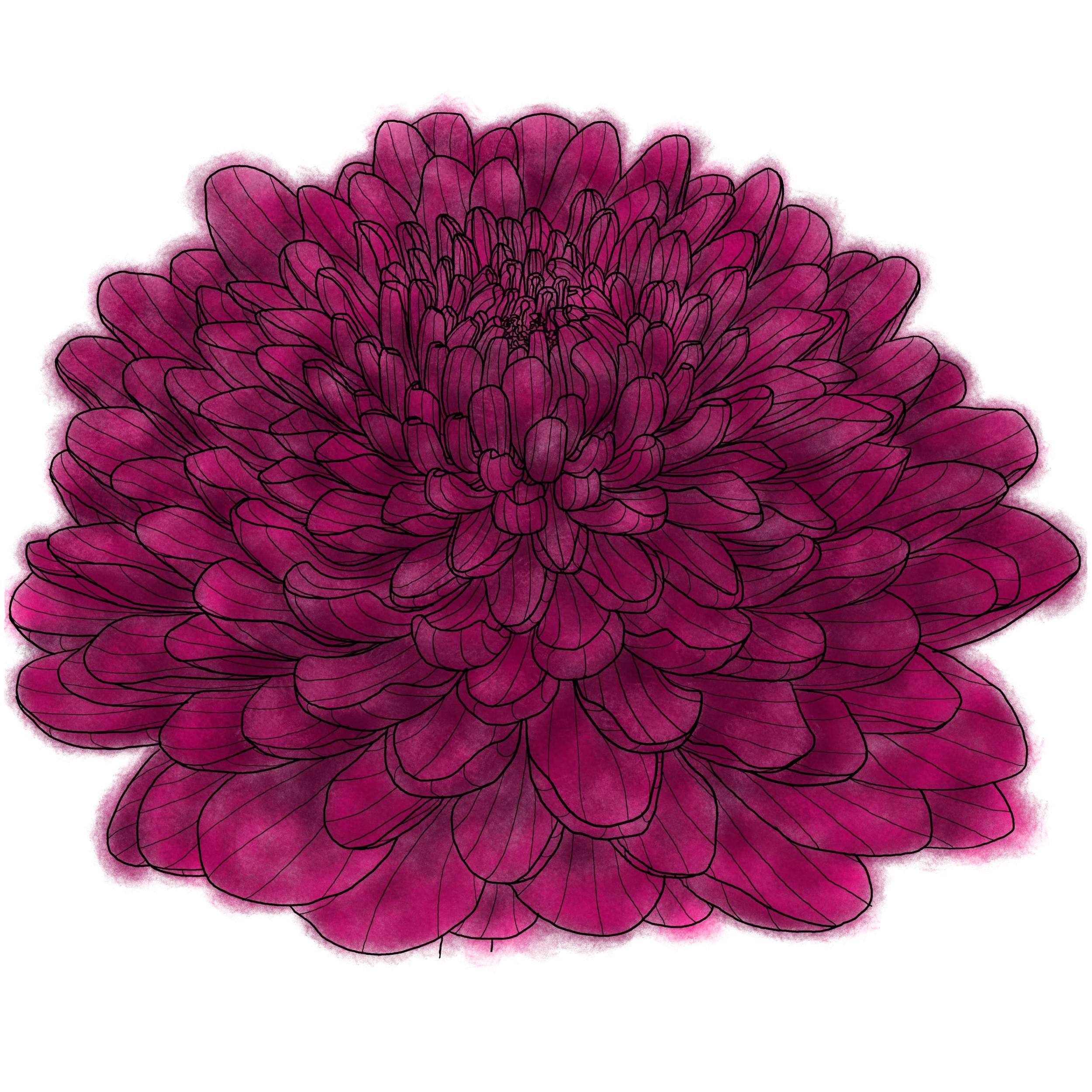
Chrysanthemum (Chrysanthemum × morifolium)
The variety in colour is vast, everything from deep plums such as this, to delicate white blooms.