
Red Cap, Flying Reindeer
The fly agaric is more than a fairy tale prop.
This week the pages of my fungarium are open to the fly agaric (Amanita muscaria).
This botanical study of the fly agaric was created as part of my ongoing series of research-led illustrations for wellness brands and educational content. After sketching this fly agaric on paper, I used a Wacom pen and the program Rebelle to digitally draw the mushroom.
Whilst the cap, the most recognisable part of the mushroom, is simple, the rich, fine-line detailing of the gills and stalk required high concentration and focus, a small patch of detailing that I find genuinely absorbing: the simple repetition is quiet work that clears my mind.
One of the most instantly recognisable fungi with its red cap and white spots, the fly agaric is a mainstay of illustrations and animations and probably springs to mind when thinking of toadstools.
The red cap is the most familiar version, but the fly agaric can also be orange or even yellow, and those little white spots on the cap are remnants of a veil that covers and protects the young mushroom before the cap expands. They can wash off in heavy rain.
Keeping the toadstool connotations in mind, the fly agaric is toxic: part of its name is a reference to its medieval usage as a fly poison, the cap was soaked in milk to attract and kill flies. Agaric is the term used to describe a mushroom of that umbrella shape.
The fly agaric has a more surprising mythological connection than its fairy tale appearances suggest. Whilst it's often used as a visual shortcut for witchcraft in stories, Father Christmas and his flying reindeer may also owe something to the fly agaric. The mushroom has long been used in shamanic ritual across Siberia and northern Eurasia, and some ethnomycologists believe its effects on perception are the origin of that particular myth.
Consumption of the fly agaric can cause sedation, confusion and visual distortion, and serious poisoning, but in Siberia it has also been traditionally used topically to aid joint pain, inflammation, and sciatica. To read about more toxic but beautiful aspects of nature, come back in a fortnight when I will be writing about the birth flower of November, the chrysanthemum.
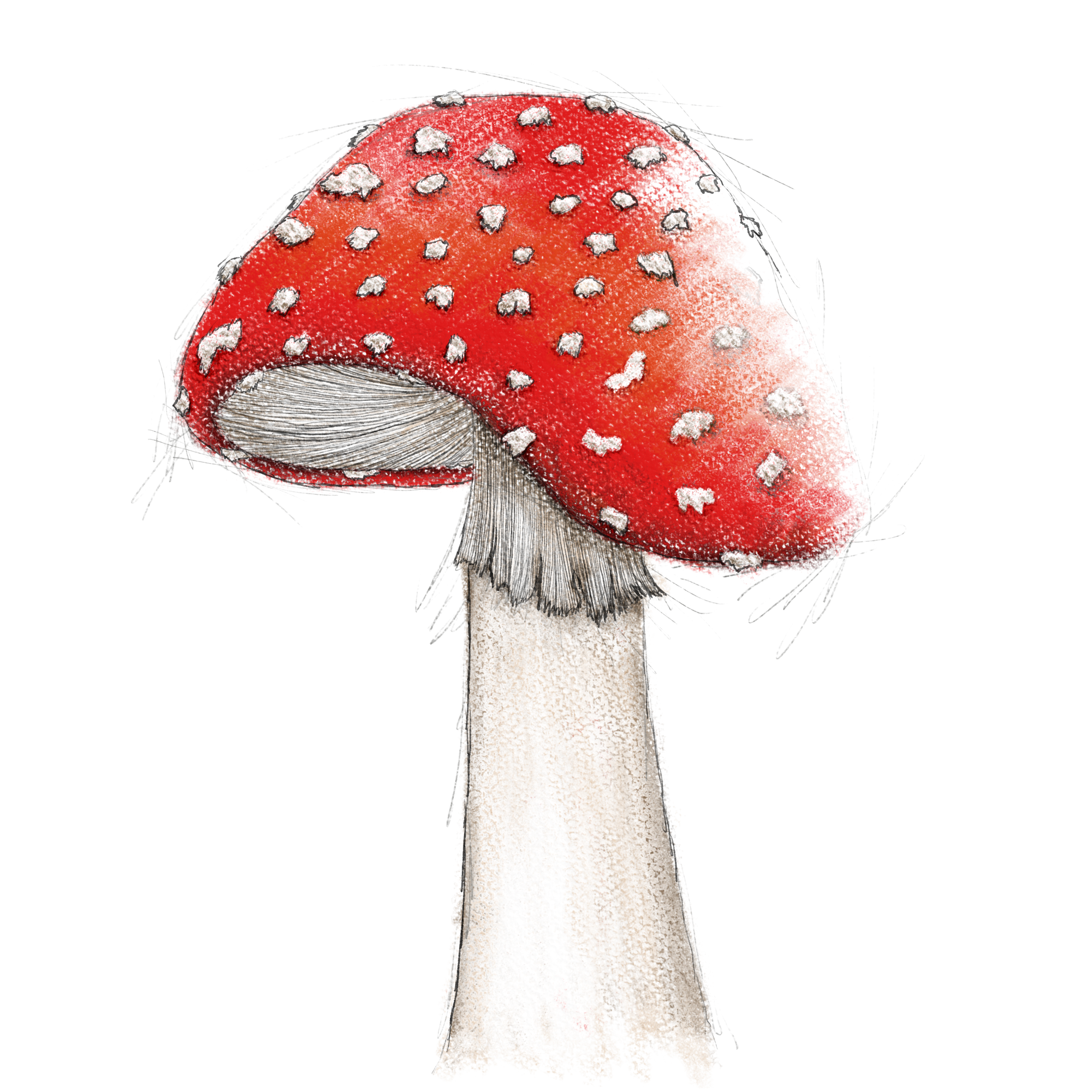
The red cap is the most familiar version, but the fly agaric can also be orange or even yellow.